Transforming Compliance with a Modern Audit Management Module
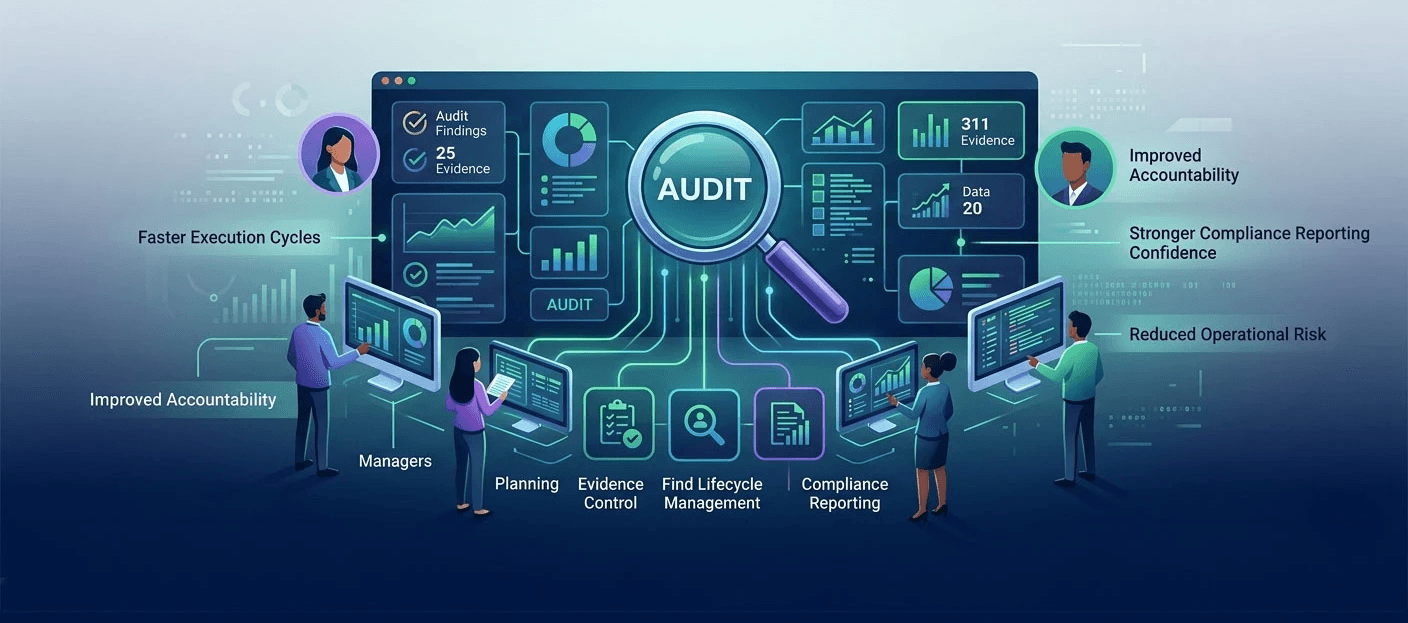
Organizations today need more than spreadsheets and email threads to run audits. They need a connected, secure, and measurable process that links audit planning, finding lifecycle management, evidence control, and compliance reporting in one place.
The Audit Management module is built for exactly that.
Why Audit Teams Need a Unified Audit Workflow
Audit teams often struggle with:
Scattered findings across multiple files
Inconsistent evidence collection
Limited visibility into finding status and severity
Delayed follow ups and action plan closure
Weak traceability for compliance reporting
A centralized Audit Management module solves this by creating one source of truth for audit programs, findings, comments, evidence, and activity history.
Core Capabilities of the Audit Management Module
1. Audit Group Management
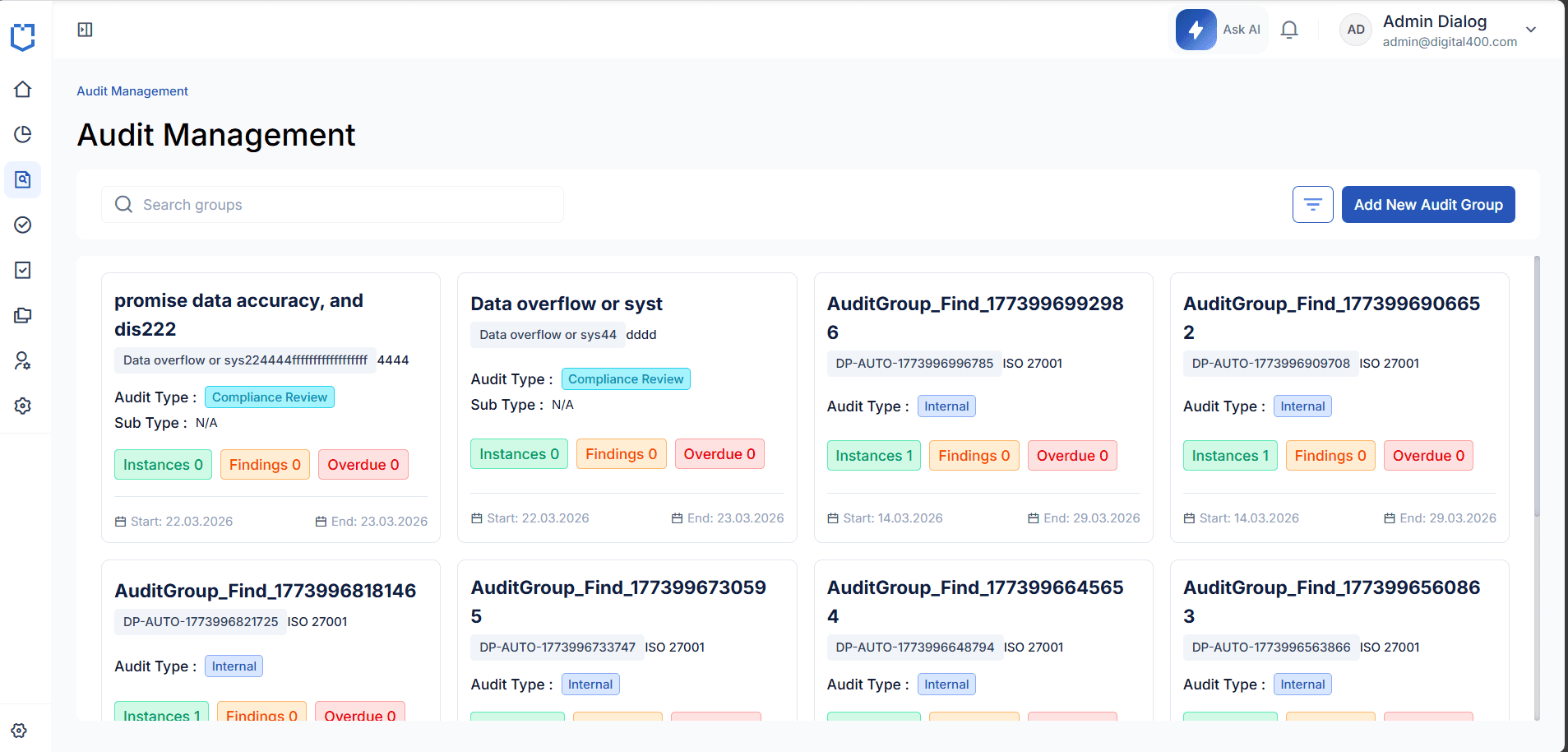
Audit groups help organizations structure their audit programs by framework, timeline, and audit type.
What i can do with it:
Create, update, and manage audit groups
Filter by framework and date range
Search quickly by keyword
View grouped stats, including findings and evidence count
This gives leaders a clean way to organize multiple audits under a controlled governance model.
2. Audit Instance Management
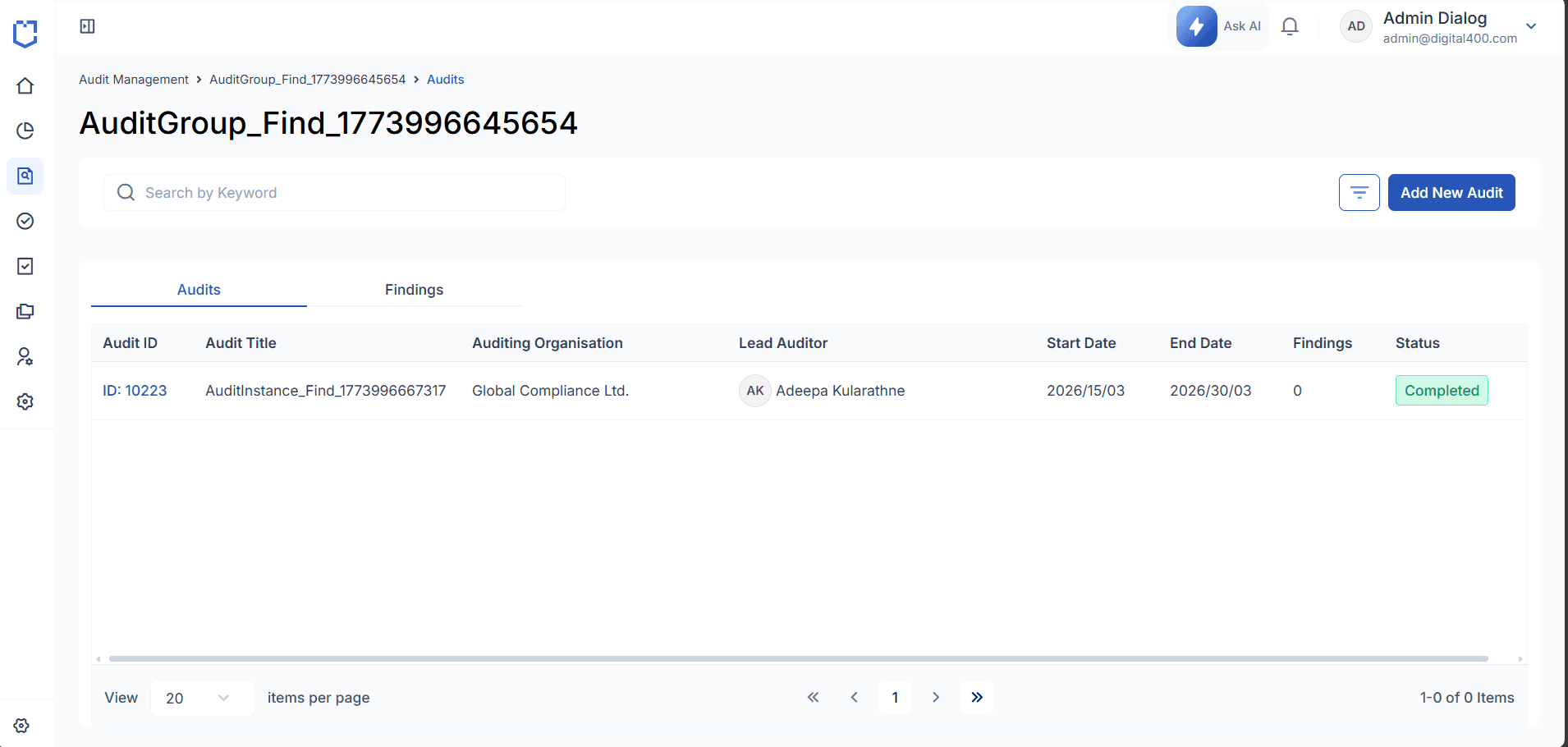
Inside each audit group, users can manage multiple audit instances. Each instance includes key details such as:
Audit ID and title
Audit description
Auditing organization
Lead auditor assignment
Status and schedule context
Users can list, create, edit, and delete audit instances, then navigate directly into the finding's workflow.
3. End to End Audit Finding Lifecycle
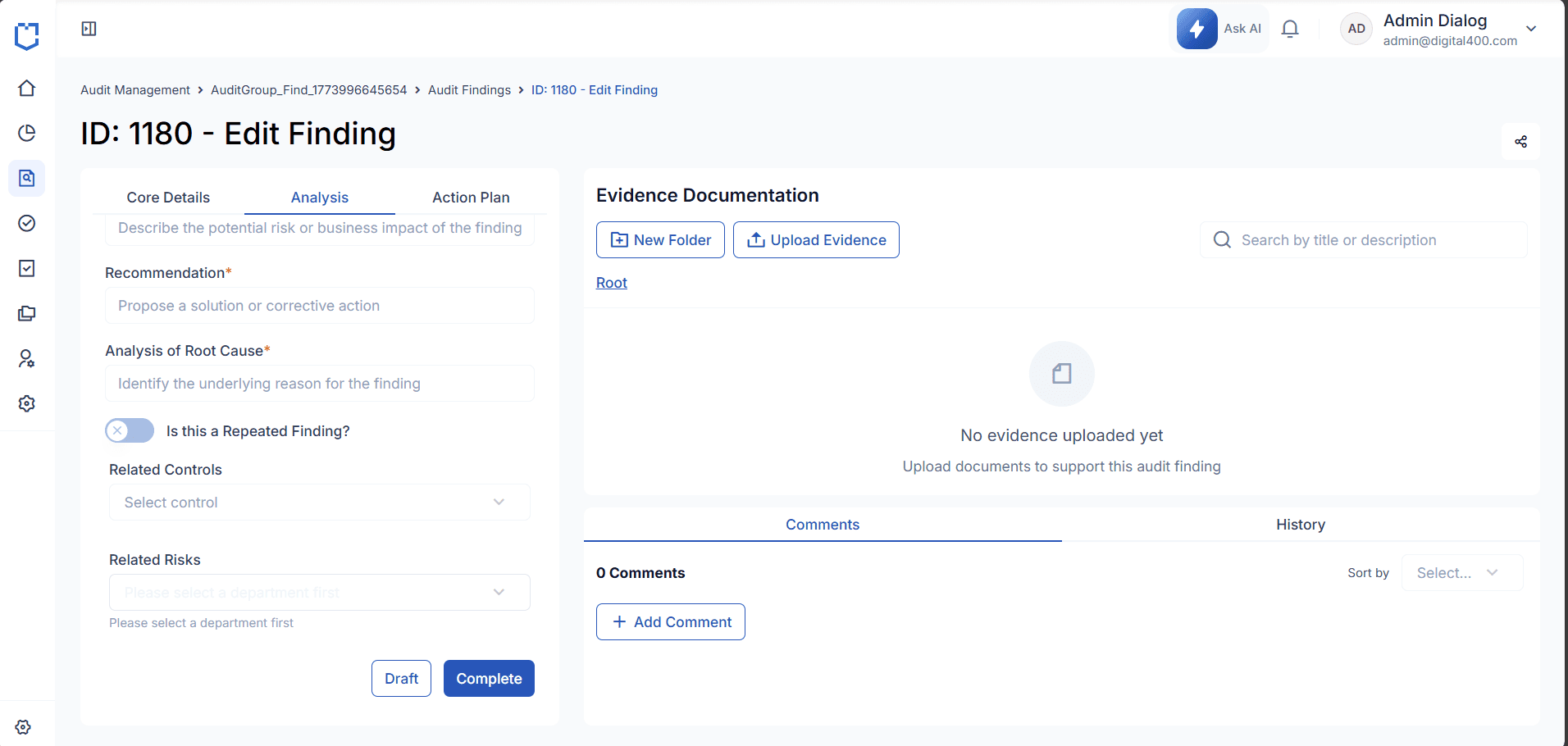
The module supports a staged finding workflow with practical completion controls:
Core Details
Analysis
Action Plan
This progression ensures data quality before closure and prevents incomplete findings from moving ahead. Teams can save drafts, complete stages with validation, and track completion status clearly.
4. Evidence Management with Folder Structure
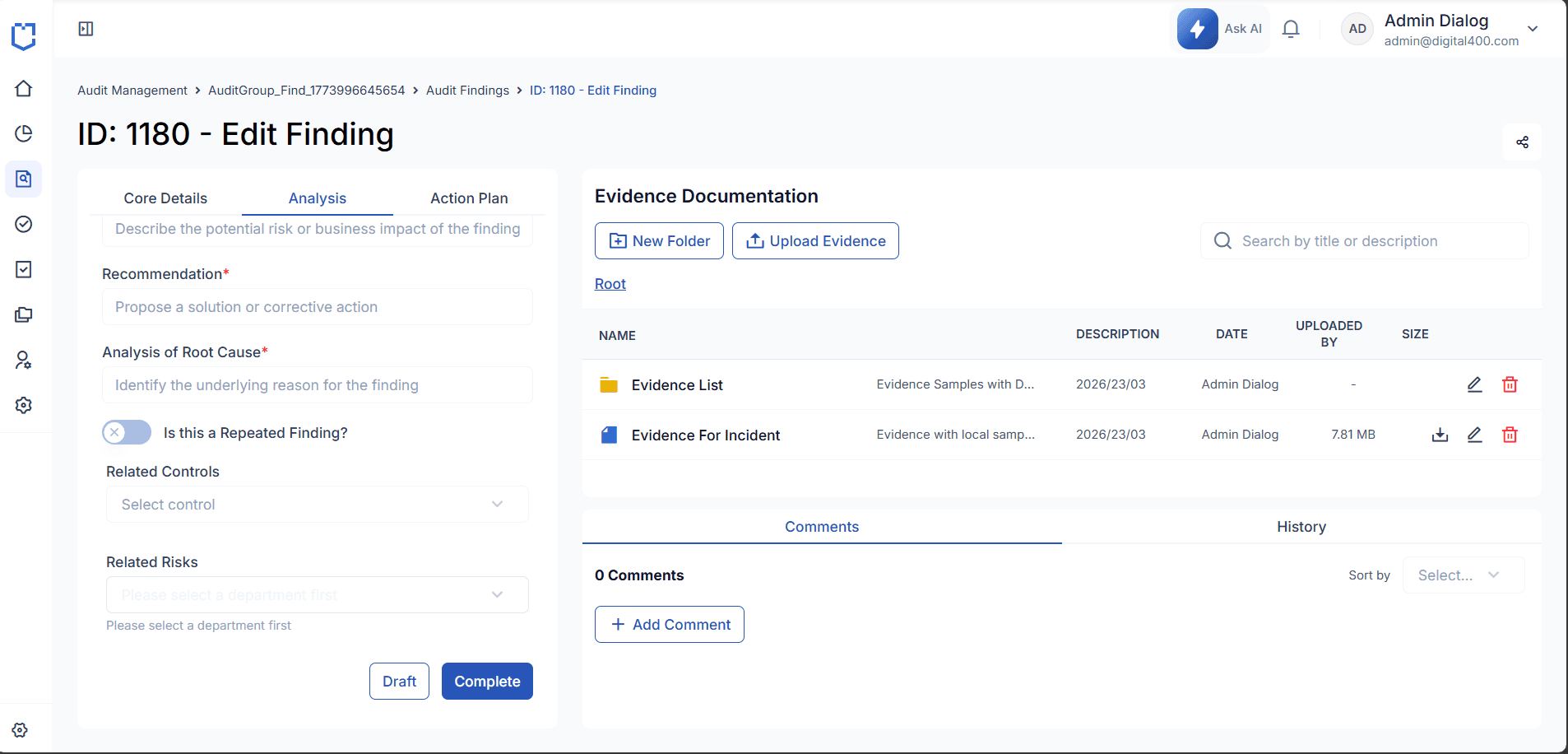
Evidence handling is a first class capability, not an afterthought. Teams can:
Upload evidence files to findings
Create and manage nested folders
Search evidence by title or description
Soft delete files and folders when needed
Maintain finding level evidence organization
The evidence hierarchy supports enterprise documentation standards and cleaner audit trails.
5. Streaming Evidence Download for Large Files
Evidence download is optimized through streaming support, which improves reliability and user experience for larger files. Instead of heavy client side buffering, downloads stream efficiently, reducing memory pressure and improving performance.
This is especially important for audits with high volume attachments and larger artifacts.
6. Finding Comments and Discussion History
Each finding can include threaded comment history for context and accountability. This improves collaboration between auditors, control owners, and management during remediation and follow up.
7. Activity History and Traceability
The module records activity history by audit entity, helping teams answer key questions quickly:
Who changed what?
When was a status updated?
What actions were performed in the finding lifecycle?
This strengthens audit defensibility and governance transparency.
8. Audit Dashboard and Widget Based Insights
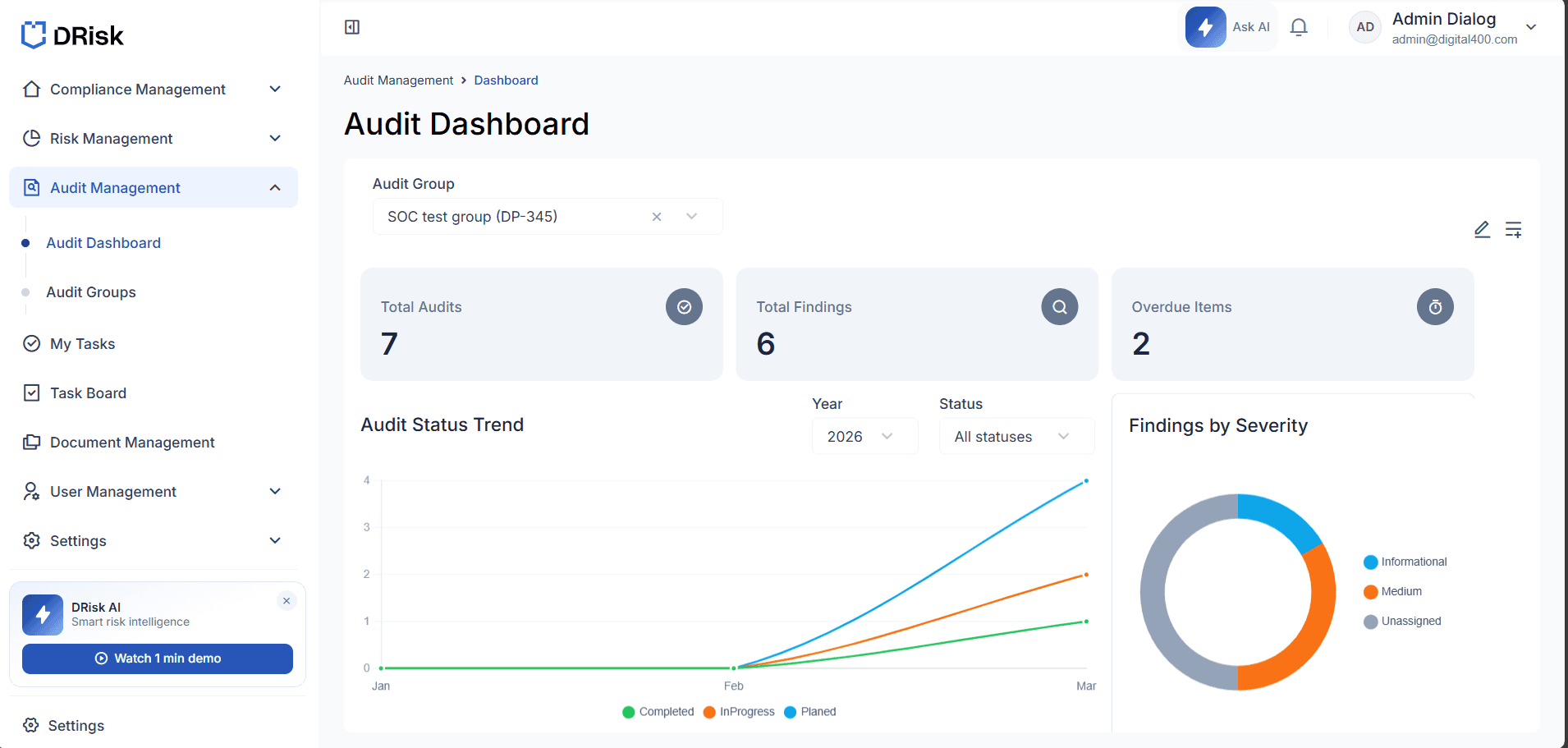
Audit dashboard capabilities provide configurable visibility across audit groups using widgets. Teams can monitor progress and trends in a single view, then tailor layout and selected widgets per audit context.
This supports executive reporting and operational decision making.
9. Role-Based Access and Department Limited Permissions
The module includes granular permissions for audit management, audit groups, and findings, with support for limited access patterns. This balances collaboration with governance and least privilege security.
Business Benefits
Organizations using a structured audit module like this can achieve:
Faster audit execution cycles
Better evidence quality and retrieval
Improved remediation accountability
Stronger compliance reporting confidence
Reduced operational risk through repeat finding control
Scalable governance across teams and departments
Who Should Use This Audit Module?
This module is ideal for:
Internal audit teams
Compliance and governance teams
Quality assurance and control owners
Regulated organizations managing ISO, SOC, and policy controls
Enterprises needing audit traceability and measurable remediation outcomes